On-site SEO: 5 indispensable factors when building a website
There are many ways to increase search rankings on search engines like Google. In which, On-site SEO is one of such ways. However, if you understand that On-site SEO is merely increasing search rankings on Google, it is not.
SEO or Search Engine Optimization also means optimizing the searcher’s experience. In this article you will find the five most important elements of on-site SEO and tips for optimizing your website effectively.

Table of contents
1. Content elements in On-site SEO
“Content is King” (Content is King)! But to make your website in the top search, just good content is not enough.
According to a study by Ahrefs, up to 91% of online content generates no traffic from Google. Therefore, to get the best optimization results, we need to understand how search engines are evaluating website content.
First, the content must be related to the User intent (the user’s search goal).
Search engines are evolving towards better understanding of user intents.
Google’s algorithms are working hard to better understand the syntax and meaning of what users are searching for.
In fact, content relevancy and user search intent can be considered the most important ranking factor on search engines. Because if the content isn’t relevant to what the user is looking for, then that content will be devalued.
Optimal tips:
- Understand intent in keywords (Ex: syndication, shopping, positioning)
- Analyze the SERP (Search Engine Results Page) for these keywords and see what types of content are ranking high.
- Research the semantic similarities of those keywords and optimize them.
Second, the content provided is useful and in long-form
Content that is large enough, deepens an issue, and is novel will be more and more prioritized by search engines.
A HubSpot study found that articles between 2,250 and 2,500 words tend to get more organic traffic. This is a good point for On-site SEO. Sometimes it can also be beneficial to create content articles longer than 2,500 words when needed.
Besides, becoming a master in a certain topic not only increases your on-site SEO ranking value, but also helps you to become a thought leader in your industry and creates new business opportunities. .
Optimal tips:
- Research the pages that are ranking high and analyze their content.
- Add semantically relevant keywords to highlight content and create subtopics.
- Answer all the questions you think users might ask on that topic.
Third, the content must be organized
Although search engine optimization allows to analyze the meaning of a user’s search, the Card SEO (SEO Tag) still plays an important role in creating content.
Some of the benefits of title tag optimization are:
- Communicate the correct search intent and syntax of the posted article.
- Rearrange the content in a clear and understandable way, making it easier for readers to find.
- Make your pages easier to scan
- Help your site pass the “5 second rule”.
Optimal tips:
- Insert the focus keywords in the title tag , URL slug .
- Create heading sections (H2, H3, H4) using related keywords.
2. On-site SEO factors in terms of user engagement ( User Engagement )
We not only design websites for search engines but also for users. Therefore, look at your website and its content from a fresh perspective.

That is, the content must be attractive to the user and not boring.
Interactive ( User engagement ) or the feedback signal from the user, has long been suspected indirectly a Google ranking factors.
However, user signals can be an indicator to help you improve your site.
Here are three metrics that you need to keep in mind when on-site SEO.
Pages per Session ( Pages per Sessions )
Pages per session metric shows how many pages a user viewed before leaving your site. This metric, and the metric for the amount of time users spend on your site ( Average session duration ), can be found in Google Analytics.
What this metric tells you is how engaging and engaging your site is. Pages-per-session metrics, combined with analyzing user behavior on your website, can help you spot sales funnel holes or conversion problems .
In addition, it can also show you whether the blog or articles are well-engaged and attractive. Usually, if a reader is viewing multiple articles in a session on your website, it means you are on the right track.
Optimal tips:
- Analyze pages with high bounce rates and find ways to increase session lengths to longer or more pages per session.
- Insert “ calls-to-action ” on the page to increase conversions.
- Add mid-article navigation such as placing internal links or providing more related articles.
Bounce rate
Bounce rate is another troubling metric. While it’s not a ranking factor, it can have a positive or negative effect on you, depending on how you look at it.
In addition, bounce rate also indicates how satisfied users are with your landing page or website.
A high bounce rate can indicate that your page is unattractive and not meeting user goals, which is especially important for e-commerce sites.
A user’s bounces can also show that they’re satisfied and getting the answers they’re looking for.
How to optimize:
- Tell a compelling story or lead
- Eliminate interstitial and pop-up advertisements.
- Improved page load time.
- Make sure the landing page copy is relevant to the search queries.
Clickthrough rates ( Click-Through Rate (CTR))
The site listing shown on search results is the first interaction a user has with your site. CTR is one of the indicators that indicates whether the interaction was successful.
A low CTR may indicate that your message is not relevant to user searches. It could also indicate that your meta description or title tag is n’t compelling enough.
Optimal tips:
- Insert exact match keywords in the title tag and description tag so they are bold.
- Add the benefit of clicking to the page for the meta description.
- Make sure the card length is adequate.
3. Technical structural elements in On-site SEO
Next, we need to look at how the technical fabric will affect user engagement and keyword search rankings.
“ Technical SEO ” can be thought of as the foundation of on-site SEO, where all else is built. Without a solid technical foundation, your content home will fall apart.
Crawlability
To be indexed ( Index ), your website needs to be gathering information. Search engine crawlers only have access to the links provided in the sitemap ( sitemap ) and available from your homepage.
This makes internal links extremely important, which we will discuss later. For now, we’ll just be concerned with making sure the site is crawlable and the crawl budget is optimized.
This is determined by your speed and data collection needs.
Crawl rate is a metric that measures the number of requests per second a crawler makes to your site. Meanwhile, a definite crawl need will determine how often a crawler will crawl your site.
Although most webmasters don’t worry about crawl budget. However, budget is still a concern for large sites. Crawl budget allows webmasters to prioritize which pages should be crawled and indexed first.
Optimal tips:
- Create a sitemap (mapsite) using CMS or Screaming Frog , and then submit it to Google Search Console or Bing Webmaster Tools .
- Block all pages you don’t want to be crawled (or indexed) by putting them in disallow files ( robots.txt ).
Security technology
A secure HTTPS website is very valuable to ensure the safety of transactions on your website It is also part of the “Page Experience ranking factor” of Google.
The number one digital error we find on client sites is the error linking to mixed content or HTTP pages. This can happen during SSL migration or some other cause.
Although in theory, links on the page should redirect to their HTTP counterpart. But, having links to mixed content is still not beneficial. More importantly, these links don’t always redirect in the right direction.
Optimal way:
- Contact your hosting provider if any problems persist with SSL certificate implementation and certification .
- Run a page crawler with Screaming Frog to specifically identify mixed content errors.
- Place sitemaps in the robots.txt file independent of any user commands.
- Rewrite the file . htaccess to redirect all website traffic to a specific domain using HTTPS URLs.
URL cleaning technique
Equally important is that you don’t want your content to be linked to broken pages or redirected to another page. Not only can this affect access speed, but it can also affect crawling and indexing budgets.
Status code issues can appear on their own over time or as a result of site migration.
Usually, you want a clean URL structure with a 200-code status.
Optimal way:
- Run a crawl of your site using Screaming Frog to uncover 4xx and 5xx status codes.
- Use 301 redirects (301 redirects) on broken pages to direct users to more relevant pages.
- Implement custom 404 pages with pre-existing URLs to redirect traffic to relevant pages.
- Contact your web host provider if there are any 5xx errors affecting the URL.
4. Internal linking factor (Interlinking) in On-site SEO
Internal linking is important from many SEO perspectives because:
- Ability to collect information
- UX and IA
- Content
- Link Building
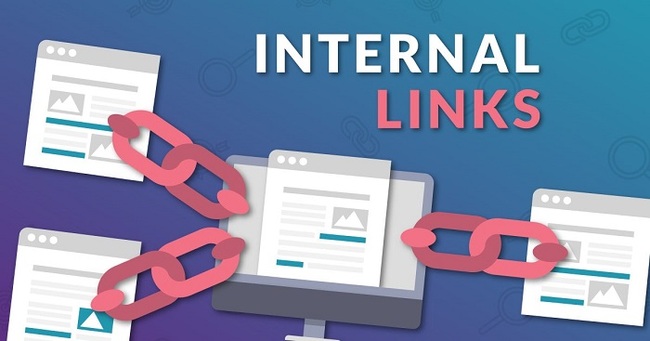
If technical SEO is the foundation of a website, then internal linking is the door that allows you to move from room to room.
But as websites grow and business situations change, it can be harder to maintain consistency and a solid linking structure.
Internal link by link deep ( Deep links )
Deep linking has been considered an SEO best practice since the advent of the Internet.
Basically, deep linking is linking orphaned pages on your website to another category page to transfer authority from one page to another and ensure that it gets indexed.
Creating organized links around similar topics allows the lower pages of your site to take some of the authority from the higher authority pages.
It also gives users additional actions to take on the site, such as reading more about a subtopic or going to a different section of your site.
Optimal way:
- Conduct crawls to identify orphaned pages that are not being indexed.
- Use links strategically in content to transfer authority and supplement content (minimum 2 per post).
Organized Hierarchy
All websites include a theme hierarchy designed to communicate the purpose of each part of the site to users and search engines.
Go to a site like “Search Engine Journal” and you will see how the top navigation is designed to create a topic tree in the form of digital marketing.
Tags have even been implemented to help organize content and help readers understand the context of certain topics.
In general, your hierarchy should be designed with a top-down approach, allowing search engines to crawl and index pages in buckets or clusters.
Optimal way:
- Use keyword optimize category page & semantically related keywords sub-category pages.
- Add a link or link in the footer for the user to navigate back to a specific page.
5. Optimizing for mobile ( Mobile Optimization ) in On-site SEO
In the mobile-first index era, it is paramount that your website is mobile-friendly. The mobile-first index has become Google’s primary ranking index, which means it’s updated before the desktop index.
When designing for mobile users, it is important to keep in mind the size of the device, as well as the various considerations when surfing on mobile devices.
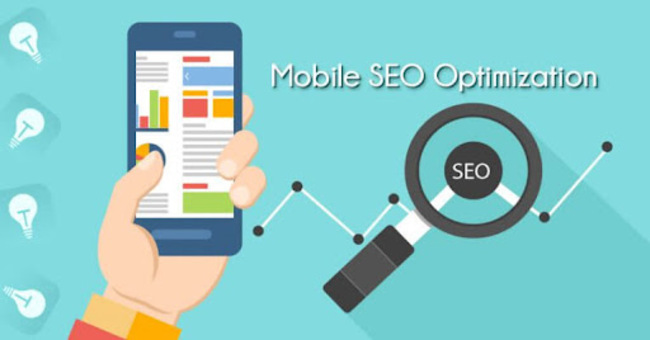
But overall, the two most important mobile factors include mobile-friendly design and fast page loading speed.
Optimal way:
- Implement responsive web design.
- Tag pages with AMP code using CMS
- Improve page speed by minimizing onsite resources.
Conclude
While it’s impossible to cover every element of on-site SEO, the article will serve as the foundation to help build your next website.
SEO is a dynamic industry, and by looking at it from a holistic perspective, we can better serve our users and survive as algorithms change.


Comments
Post a Comment